Total Hip Replacement
Indications for Total Hip Replacement
There are a variety of conditions which may result in a worn-out hip joint. Most common is osteoarthritis, a “wear-and-tear” condition in which the protective cartilage covering of the joint gradually thins out over time, resulting in progressive hip pain and stiffness.
More rarely seen are the inflammatory types of arthritis, such as rheumatoid arthritis, which is a medical condition resulting in progressive cartilage loss. Previous injury or deformity to the hip results in changes to the local biomechanical properties of the joint, which may accelerate cartilage loss.
Another common reason for hip replacement is avascular necrosis, a condition in which the hip loses its blood supply, gradually resulting in the collapse of the joint with concurrent loss of cartilage.
When the joint damage has become sufficiently severe, and the patient’s quality of life is beginning to suffer, a total hip replacement may be indicated.
Historical Perspective
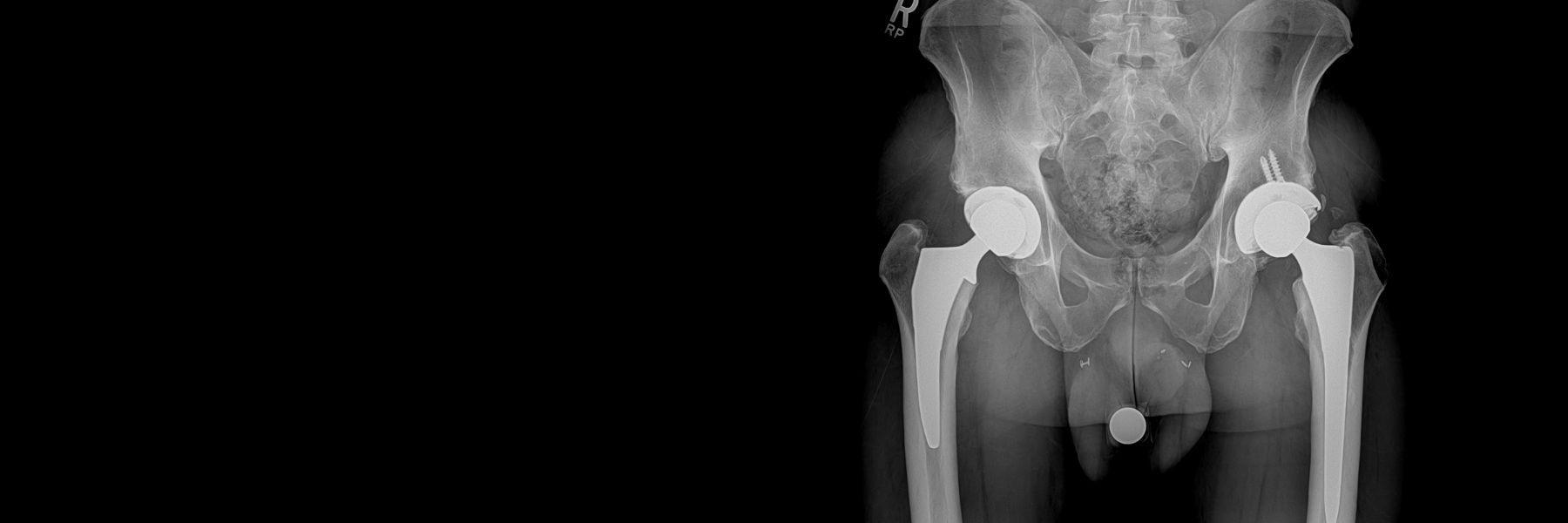
Total hip replacement surgery is a tremendously successful procedure for eliminating pain and restoring function in patients with severe hip arthritis. Most simply put, a total hip replacement involves removal of the damaged cartilage and bone from the ball and socket of the patient’s arthritic hip and replacing these with a new ball-and-socket implant that allows the patient to walk with smooth motion and without pain.
Historically, a variety of dissection techniques (called surgical approaches) have been used to gain access to the hip joint. Each of these approaches has its own advantages and drawbacks. Most recently, the Direct Anterior Approach, which has been highly utilized in Europe for many years, has gained increasing popularity over the last decade in the United States.
A Minimally Invasive Technique
The Direct Anterior Approach utilizes an intermuscular plane of dissection, meaning no muscles or tendons need to be cut during the surgery. Because of this preservation of the soft tissues, patients do not require any hip precautions or restrictions during their rehabilitation period. Immediate weight bearing as tolerated is prescribed, with no restrictions.
Surgical Technique: Patient Positioning, Limb Control, and Fluoroscopy-Assisted Computer Navigation
During a hip replacement using the Direct Anterior Approach, the patient is positioned supine on a traction table (the Hana® table) that allows independent positioning of the limbs during surgery. This position facilitates the use of C-arm fluoroscopy. C-arm fluoroscopy is an intra-operative x-ray camera that projects images on a computer monitor in the operating room and is used to navigate the position of the hip socket and stem in real-time during the procedure. The fluoroscopic images are analyzed by computer software (OrthoGrid Systems, Inc.), which registers multiple anatomic landmarks in order to calculate socket position, leg length, and offset. This allows the surgeon to make small adjustments intra-operatively, in order to ensure an anatomic reconstruction.

Post-Operative Recovery
After a direct anterior total hip replacement, patients may immediately weight bear as tolerated, with no restrictions. Specific physical therapy protocols are available on the website and will be initiated by your physical therapist.
For the first 2-4 weeks, patients are encouraged to walk, practice going up and down stairs, and generally resume the activities of daily living.
By 2-4 weeks, most patients have discontinued the need for a cane and are walking unsupported.
From 6-12 weeks, the patient will notice larger gains in physical therapy in terms of endurance, range of motion, and strength.
Usually by 12 weeks, the patient is starting to feel close to normal and is resuming most activities, but many patients continue to see ongoing improvement even up through one year after surgery.
Dan W. ⭐⭐⭐⭐⭐
"Dr. Gladnick did a total anterior hip replacement on me last February. After four weeks of dedicated rehab, I was able to travel to Florida in mid-March for a family vacation. Knee and hip pain is gone, and I can walk again without a limp. Thank you Dr. Gladnick!"
Frequently Asked Questions
The most important part of the implant is the bearing surface. This is the smooth, polished part of the implant that articulates at the level of the joint, allowing the low-friction motion which is required to walk normally. Over time, surgeons have tried many different combinations of bearing surfaces, each of which has certain advantages and drawbacks. The most predictable results are found using bearing surfaces that have stood the test of time, and have demonstrated decades-long survivorship in longitudinal registry studies.
The hip replacement prosthetic is a ball-and-socket articulation. The ball is made of a highly polished medical-grade ceramic, which is a very smooth and very durable material. The ceramic ball is impacted onto the trunnion of a titanium-alloy stem which has been inserted into the canal of the femur. This titanium stem is coated with a rough layer of a material called hydroxyapatite, which encourages the patient’s own bone to robustly grow onto the new stem.
On the socket side, the bearing surface is a highly cross-linked polyethylene liner, a very durable medical-grade plastic with superior wear properties. This liner is impacted into a titanium hemispherical shell, which has been inserted into the patient’s own hip socket. Like the stem, this new socket has a roughened outer surface that allows new bone to grow in, unitizing the implant to the patient’s body and providing long-lasting, durable fixation. Thus, while the implants themselves are made of titanium alloy, the final bearing surface is ceramic-on-polyethylene.
Meet Dr. Gladnick:
Brian P. Gladnick, MD
Dr. Gladnick is a Magna Cum Laude graduate of the University of Delaware, where he was elected to Phi Beta Kappa. He went on to earn his medical degree from Cornell University in New York, where he received the T. Campbell Thompson Prize for excellence in Orthopaedic Surgery. He completed his residency in Orthopaedic Surgery at the Hospital for Special Surgery/Cornell Medical Center in New York, followed by a fellowship in Adult Total Joint Reconstruction at the OrthoCarolina Hip and Knee Center in Charlotte. He now serves as the fellowship ...
Total Hip Replacement Technology
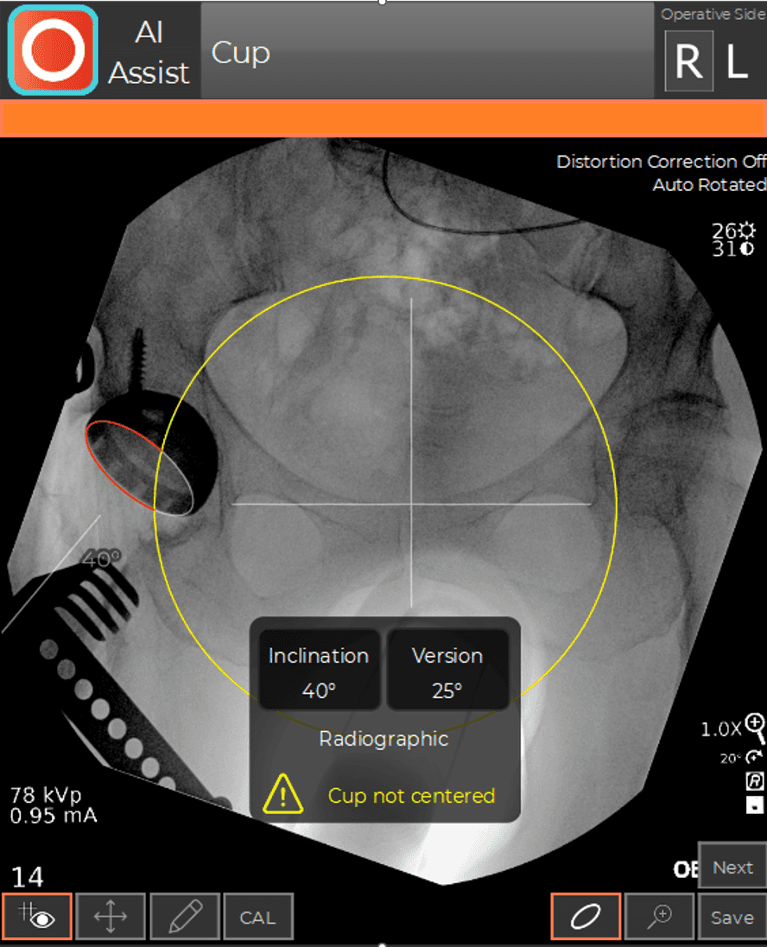
Artificial Intelligence Computer Navigation: Cup Position
Accurate cup positioning is vital for a well-functioning total hip replacement. Taking into account the individual characteristics of the patient's acetabular anatomy, spinal stiffness, deformity, and pelvic tilt, the surgeon aims to place the cup within a narrow range of inclination and anteversion values. Artificial intelligence software is used to monitor the patient's cup position in real-time during the surgery, ensuring that the component is precisely implanted into the "safe zone" of inclination and anteversion designated by the pre-operative plan.
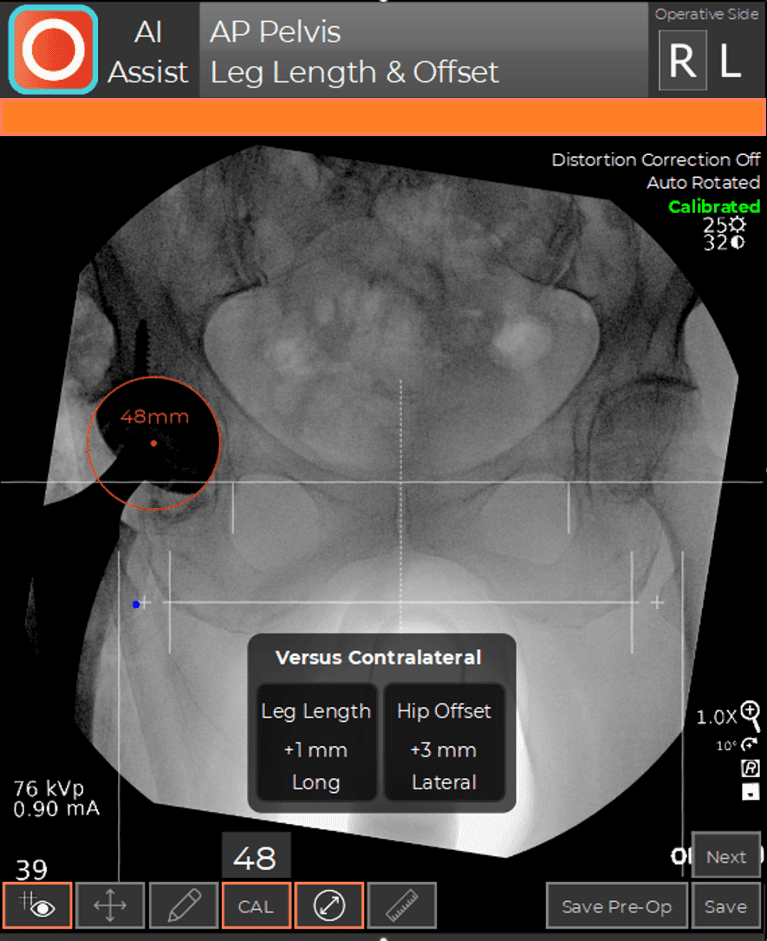
Artificial Intelligence Computer Navigation: Leg Length and Offset
Reproduction of normal hip biomechanics is a vital part of placing the femoral stem. Using artificial intelligence software, the patient's leg length and hip offset can be precisely monitored in real-time during the procedure, allowing the surgeon to make accurate decisions about final component placement and to achieve the desired result for that patient's anatomy.
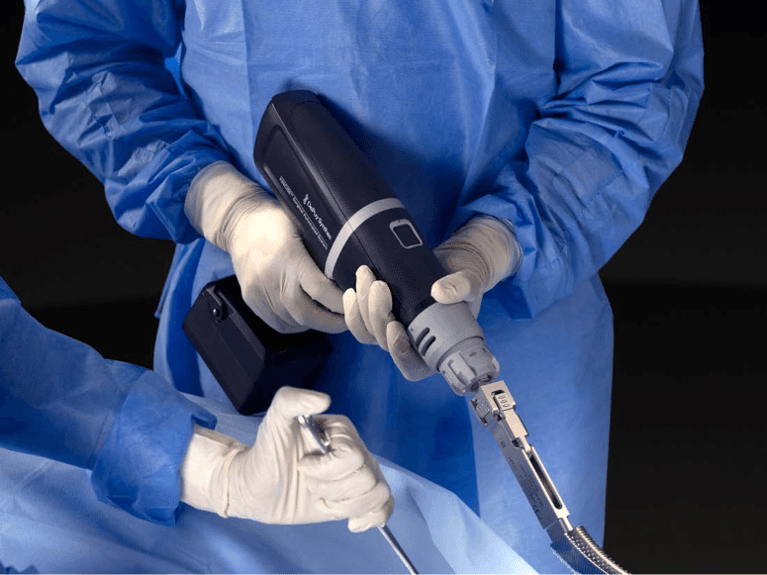
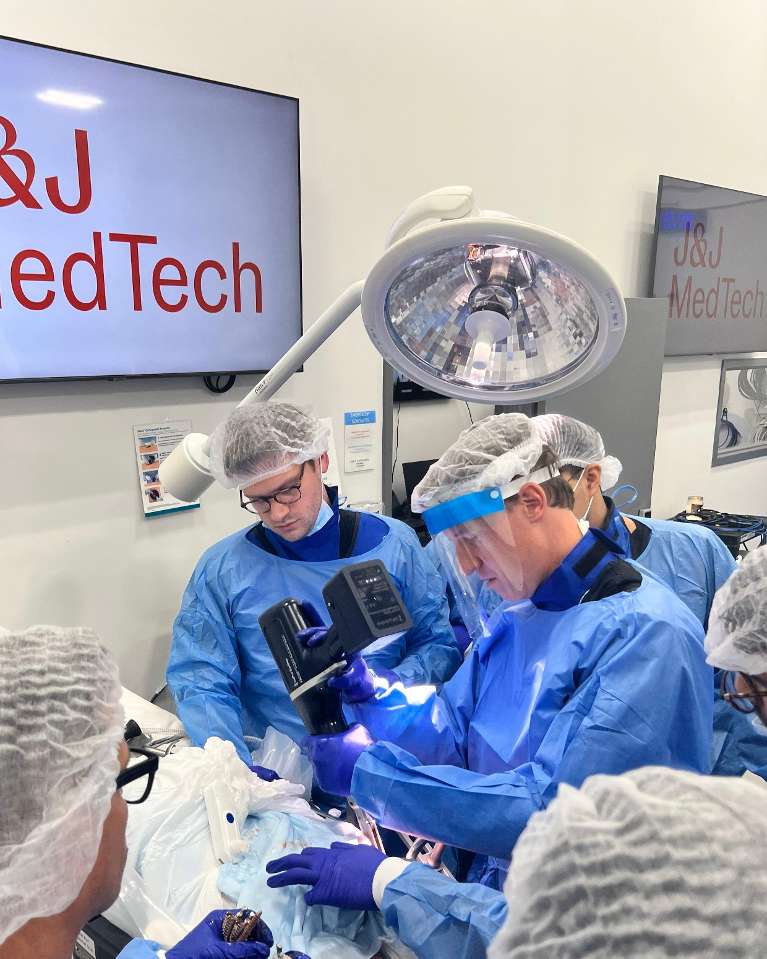
Automated Impaction
Historically, insertion of hip and knee implants into the patient's bone has been performed by the manual use of a mallet and impactor. While effective, manual impaction introduces a substantial degree of variability into the procedure, because the force, vector, and cadence of mallet strikes depend upon the surgeon swinging the mallet. The advent of automated impaction has now standardized these variables, delivering a consistent and controlled impaction force that leads to more safe and predictable seating of the implant. Moreover, the combination of automated impaction and A.I. computer navigation allows the surgeon to "dial in" the cup and stem position in real-time with a tremendous level of accuracy and precision.